Weapons Guide — Every Weapon Type and How to Choose
Published 2026-09-19Updated 2026-09-219 min read
Dragonwilds weapons explained — melee tiers, bows and ranged, elemental enchantments, and how to build the loadout each region's gear check demands.
Weapons in Dragonwilds follow a simple ladder — better materials, better damage, bigger regional checks — wrapped around three playstyles: melee, ranged and magic. This guide walks the ladder, explains the enchantment layer that sits on top of it, and tells you exactly what to bring to each region.
The material ladder
Weapons upgrade through Ashenfall's material ages, and each region's wildlife checks your rung:
| Tier | Material | Where it matters |
|---|---|---|
| 1 | Stone / crude | Tutorial hours — Vannaka's stone dagger is your first real weapon |
| 2 | Bronze | Brynmoor's exit exam; the Dragon Slayer checklist |
| 3 | Iron | Ghornfell's wilds; the mid-game standard |
| 4 | Vault and northern recipes | Fellhollow's undead and the power-5 guardians |
| 5 | Desert and endgame smithing | The pyramid vaults and the Dragon Queen herself |
Crafting runs through the Blacksmith Bench (melee), Fletching Bench (bows and projectiles) and the arcane lines taught by vault effigies. The materials guide covers the ores; the benches live in the stations guide.
The three playstyles
Melee — the honest trade
Swords, axes, maces and the shield game. Melee is the cheapest playstyle to feed (durability over ammunition) and the one boss arenas punish hardest — every major dragon's melee reach is a lesson. Melee thrives in corridors: vault halls, keep interiors and fortress fights turn enemy numbers into queues.
Bring melee when: fighting indoors, tanking for a group, or farming trash mobs cheaply.
Ranged — the region translator
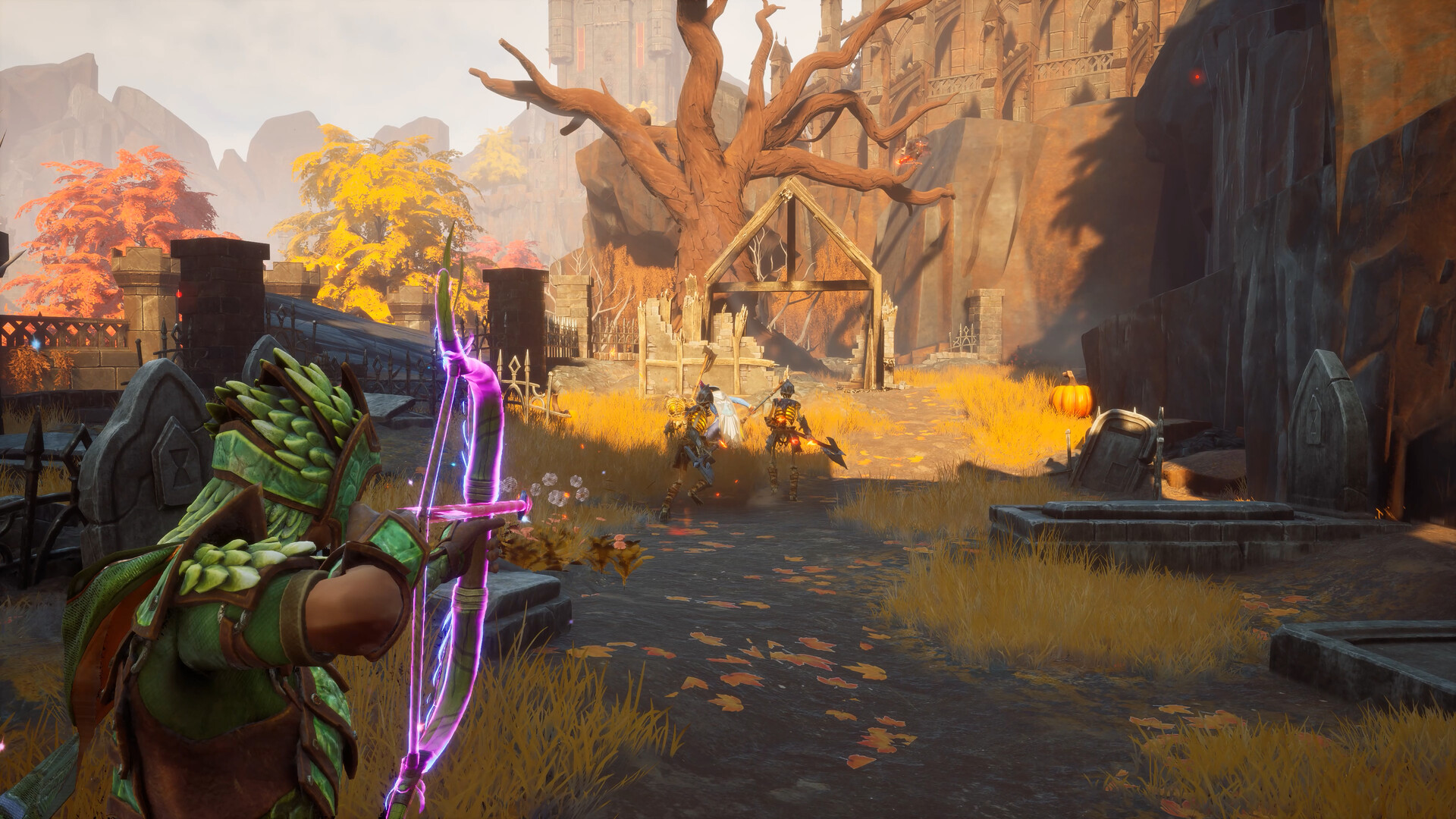
Bows from the Fletching Bench, with arrows as the running cost. Ranged solves Dragonwilds' recurring problem enemies: deer that flee (the Dragon Slayer antler hunt), necromancers in backlines, and anything with a breath cone. The Wild Scout's Shortbow from Takla Kara vault is the mid-game's definitive pickup — vault rewards carry the ranged line.
Bring ranged when: hunting wildlife, pulling vault rooms, fighting anything that flies or breathes.
Magic — the multiplier
The spellbook is a third weapon slot that never leaves your inventory: Splinter as the damage staple, Vengeance as the crowd clear, and the full roster in the spells list. Magic scales with your Magic skill and burns rune essence as ammunition — which is why the Runecrafting guide is really a damage guide in disguise.
Bring magic when: fighting bosses (control spells win phases), managing crowds, or gathering (Rocksplosion is a mining pick that explodes).
The enchantment layer
The Mystic Forge adds elemental enchantments to weapons — and this is where builds get sharp. Enchantments add elemental damage and, critically, interact with enemy weaknesses:
- Fire — the undead shredder. Fellhollow's entire roster burns; a fire-enchanted weapon roughly doubles your northern mileage. (But see below — the big dragons are exceptions.)
- Air and earth — the generalists against constructs and beasts.
- Check before every boss. Velgar ignores poison and burning; Imaru ignores poison, burn and bleed. The boss hub lists immunities — one re-enchant beats ten graveyard walks.
What to carry, region by region
| Destination | Loadout |
|---|---|
| Brynmoor vaults | Bronze melee + bow; first enchantment optional |
| Ghornfell | Iron melee, bow or early magic core, earth enchant |
| Fellhollow vaults | Iron-plus melee, bow for necromancers, fire enchantments |
| Imaru's Tower | Re-check immunities: air/earth/physical, no burn or bleed |
| Umbral pyramids | Endgame smithing lines, full enchant spread, magic core stocked |
| Kuldra's Sanctum | Damage spread (she resists nothing), control spells maximum |
Durability, ammo and economy
- Melee durability is repaired at the smithing line — cheap, and the reason melee farms cheapest.
- Arrows are a running cost — the Fletching Bench turns wood and stone into sustain; never scout with your best arrows.
- Essence is magic ammo — stock 20–50 raw essence banked at all times; the survival basics of the spellbook.
The whetstone layer
Beyond the Mystic Forge's enchantments sits the quieter half of weapon maintenance: the whetstone hone. Honing and enchanting stack — the achievement log's Sharp and Shiny entry exists precisely because the combined state is the build's true finished form. The practice rhythm: enchant per region (fire for the north, air or earth for constructs), hone before every boss attempt, and re-hone after the repair bill of a bad night. Players who treat the whetstone as optional leave five to ten percent of their damage on every table in the game — and the boss fights where that percentage is the difference are exactly the ones this guide has been preparing you for.
Frequently asked questions
What's the best weapon type? The one your region demands. Indoor dungeon crawling favors melee; open-world hunting favors ranged; boss fights favor magic control with any damage core. Most veterans run melee-plus-bow with a magic bar, swapping per encounter.
When should I enchant? The moment you reach the Mystic Forge — the first enchantment is the cheapest power spike in the game. Re-enchant per region; the forge doesn't bite.
Are vault recipe weapons worth farming? Yes — the vault track (Takla's shortbow, the northern blades) defines each tier's ceiling. The vaults overview lists what each dungeon's chest holds.